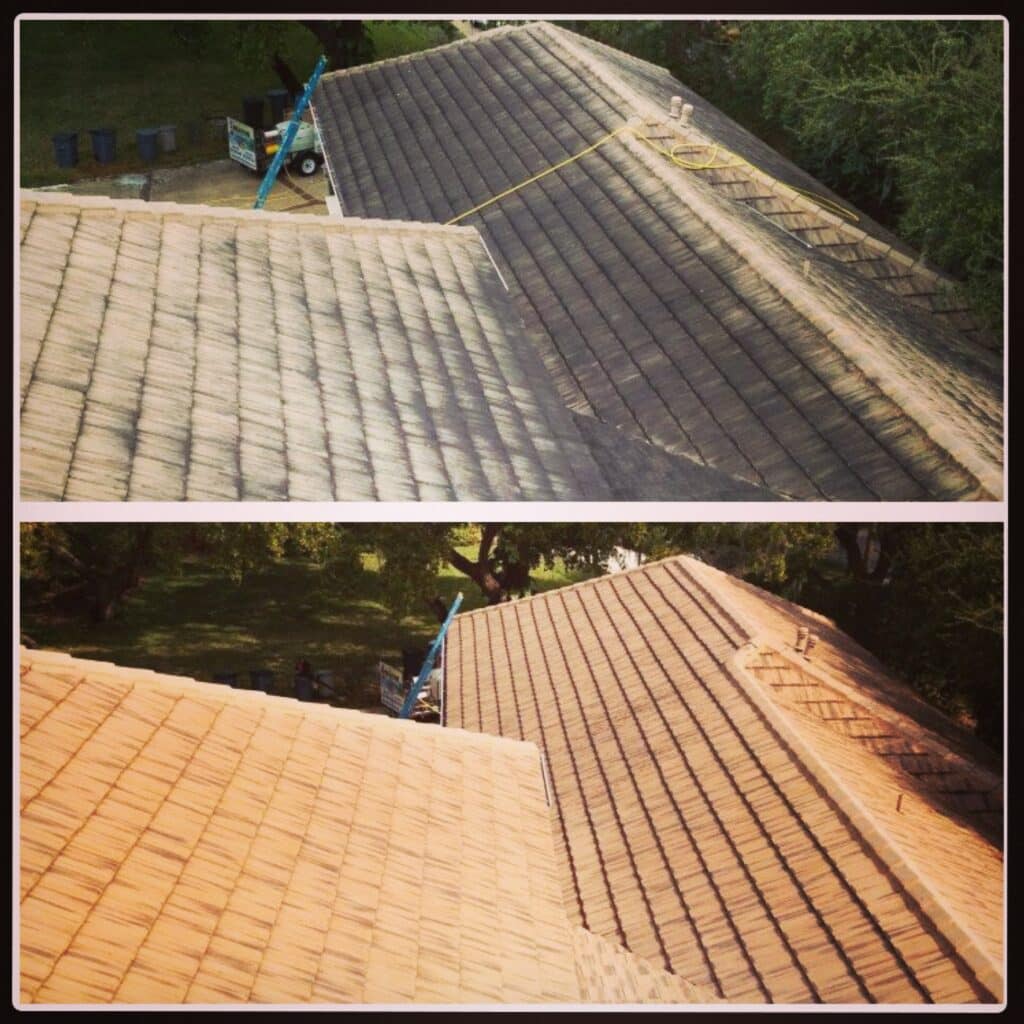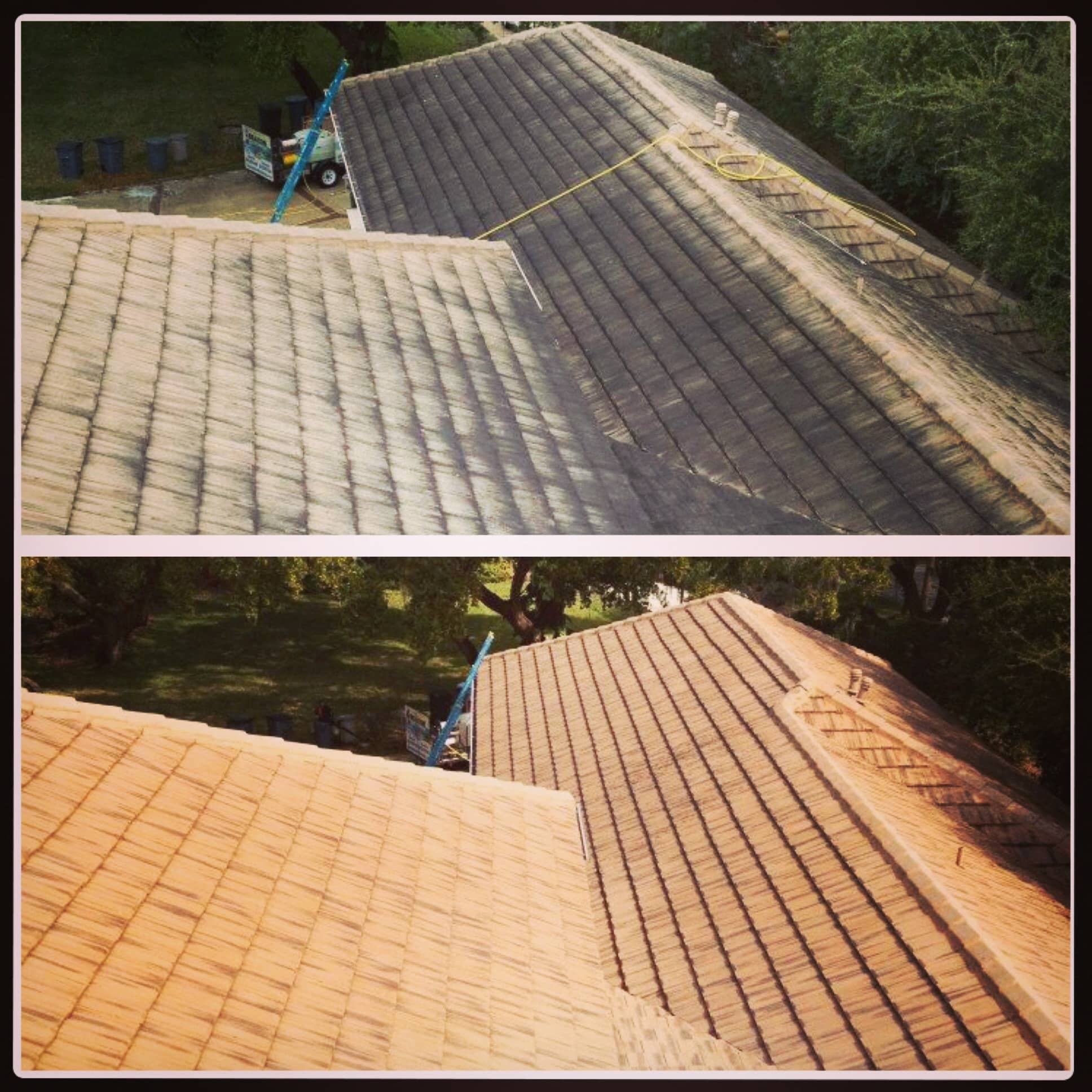

A roof is one of the most critical elements of any property, protecting the interior from the elements while adding to the overall appearance of the home. However, over time, roofs are exposed to dirt, moss, algae, lichen, soot, and other contaminants that not only detract from their beauty but can also cause long-term damage if left untreated. Roof cleaning is the process of safely removing these contaminants to extend the life of the roof, preserve structural integrity, and maintain curb appeal.
What Is Removed During Roof Cleaning?
Roofs face constant exposure to natural elements, which makes them vulnerable to buildup. A proper cleaning routine removes a wide range of contaminants:
- Moss, algae, and lichen: These growths thrive in damp or shaded areas. Moss holds moisture, which can weaken roofing materials and cause shingles to curl or lift. Algae and lichen not only stain the surface but also slowly break down the protective layers of the roof.
- Dirt and soot: Accumulated dirt can block sunlight, disrupting a roof’s ability to regulate temperature. Over time, it contributes to premature aging and discoloration.
- Debris: Leaves, twigs, and organic material can trap water, promoting rot and attracting pests.
By removing these contaminants, roof cleaning safeguards the structure while restoring its natural appearance.
Why Is Roof Cleaning Necessary?
Roof cleaning isn’t just about appearances; it plays a major role in protecting your property.
- Extends roof life
A roof is a long-term investment, and regular cleaning ensures it lasts for decades. By removing moss, algae, and dirt, homeowners prevent premature wear and reduce the risk of costly repairs or full replacements. - Protects the property
Organic growths like algae retain moisture, which can seep into shingles, underlayment, and even the wooden structure beneath. Left unchecked, this moisture accelerates rot and mold growth, sometimes spreading into the home’s interior. - Improves appearance
A roof covered in black streaks, moss, or lichen can make even a well-kept property look neglected. Cleaning instantly boosts curb appeal, making the home look fresher, newer, and more inviting. - Energy efficiency
Dirt and dark algae streaks absorb heat, which can raise indoor temperatures and increase cooling costs in summer. Cleaning restores the reflective properties of roofing materials.
How Roof Cleaning Is Done
There are several proven methods for roof cleaning, each designed to treat specific conditions while preserving the integrity of roofing materials:
- Soft washing
This is the most recommended method for residential roofs. It combines low-pressure water with specialized cleaning solutions to gently remove dirt, moss, algae, and lichen without damaging delicate shingles. Soft washing is particularly effective for asphalt shingles, tile, and slate roofs. - Chemical treatments
Biocides and bleach-based solutions are often used to kill organic growths at the root. These chemicals prevent regrowth for a longer period. After application, the solution is rinsed away with low-pressure water to reveal a clean, restored roof. - Manual scraping
For older roofs or areas with heavy moss buildup, scraping may be used as an initial step. Tools with flat blades or wire brushes carefully lift moss before chemical treatments are applied to kill remaining spores.
Each method is chosen based on the roof’s condition, material, and level of contamination.
What to Avoid
While pressure washing is effective for driveways or concrete, it is not suitable for most roofing materials. The force of high-pressure water can:
- Strip away protective granules from asphalt shingles.
- Crack or dislodge tiles.
- Force water under shingles, leading to leaks and interior damage.
For these reasons, professional roof cleaners recommend soft washing over pressure washing to ensure both safety and longevity.
Professional vs. DIY Roof Cleaning
Some homeowners consider cleaning their roof themselves, but this task carries significant risks and challenges.
- Safety hazards: Working at height requires specialized equipment, and wet or mossy roofs are extremely slippery.
- Chemical handling: Cleaning solutions must be applied correctly and in proper dilution to avoid harming the roof, landscaping, or the environment.
- Experience: Professionals know which methods work best for different roof types, ensuring thorough cleaning without causing damage.
Hiring professionals ensures the job is done safely, effectively, and in compliance with industry standards.
Maintenance Tips After Roof Cleaning
Regular maintenance reduces the need for frequent deep cleaning and helps prevent regrowth of moss and algae:
- Keep gutters clean to prevent water overflow and standing moisture.
- Trim trees near the roof to allow more sunlight and reduce debris accumulation.
- Consider installing zinc or copper strips along the roof ridge. When it rains, these metals release ions that naturally inhibit moss and algae growth.
- Schedule roof inspections every 1–2 years to catch early signs of damage or regrowth.
Schedule Your Appointment today!
Roof cleaning is more than a cosmetic improvement—it’s a vital step in protecting your property’s most important structure. By removing moss, algae, dirt, and debris, homeowners can extend the life of their roof, prevent structural damage, and maintain an attractive appearance. The safest and most effective methods, such as soft washing and chemical treatments, restore beauty while preserving the integrity of roofing materials.
Whether performed as part of regular maintenance or to boost curb appeal before selling a home, roof cleaning is an investment in both protection and value. For most homeowners, hiring a professional ensures the roof is cleaned thoroughly, safely, and with long-lasting results.
Why Is Roof Cleaning Necessary? Read More »